Gomev

Distinguished Member
Joined
Nov 1, 2020
Messages
5,133
Reaction score
6,081
Points
1,859
Location (town/city + country)
Leeds
Driving
Not an MG
Apparently pretty common in the EU, Germany and Spain particularly. Currently not approved/illegal in this country but the government are looking to change that.
What do those on this board that know about these things think about it ?
As a very low user, usually less then 5kWh per day (excluding car, which is obviously charged overnight), these look to be a relatively simple solution to harnessing a small bit of solar with cheap initial outlay. The savings will be small, but it may be horse for a particular course, and it's not always about saving money.:)

*for those that aren't sure what this is, it is basically hooking up a small number of solar panels to a box that contains all the gubbins needed to do it's thing, which is then plugged into a normal 3 pin socket in the house which feeds yours circuits, i.e. everything in the house. They also come with batteries in the gubbins box for extra dosh which can charge and discharge like big home batteries but on a very small scale.


I think it was Matt at the "Undecided" channel who did a video on balcony solar. A great idea for people living in rented apartments, or even rented houses, you could hang them on a fence.

Edit: Found it.
 
Apparently pretty common in the EU, Germany and Spain particularly. Currently not approved/illegal in this country but the government are looking to change that.
It is more complicated for the UK because of our electrical systems and plugs but others will know more about the details.

What do those on this board that know about these things think about it ?
As a very low user, usually less then 5kWh per day (excluding car, which is obviously charged overnight), these look to be a relatively simple solution to harnessing a small bit of solar with cheap initial outlay. The savings will be small, but it may be horse for a particular course, and it's not always about saving money.:)
Yeah, I've been tempted to add more battery or solar just to help in the winter though it is probably not the best economically. Once you've got a reasonable amount getting more is tempting but the marginal gains are smaller. I set up a thread about it.

*for those that aren't sure what this is, it is basically hooking up a small number of solar panels to a box that contains all the gubbins needed to do it's thing, which is then plugged into a normal 3 pin socket in the house which feeds yours circuits, i.e. everything in the house. They also come with batteries in the gubbins box for extra dosh which can charge and discharge like big home batteries but on a very small scale.
I think you'd have to check the economics of these systems vs. just getting a proper install.

They seem very expensive for the small amount of power involved. The panels you get with them are very expensive and don't output much.

The advantages seem to be that:
  • They are plug and play (so less daunting than making up your own cables etc.)
  • You can take them away with you. This is good for renters who don't want to invest in a house that isn't theirs or for camping etc. If you've bought a system for camping you may as well use it every day if you don't mind moving it around the place.
Not everyone has a suitable place for the solar (south-facing fence or balcony that isn't in the shade of a tree or building) but if you do I can see the appeal.

As an alternative get a quote from a local installer, but also if you don't want to take panels around with you consider getting some solar panels from wholesale and connecting them to the unit yourself rather than buying the branded ones (which really aren't good value per watt).
 
Last edited:
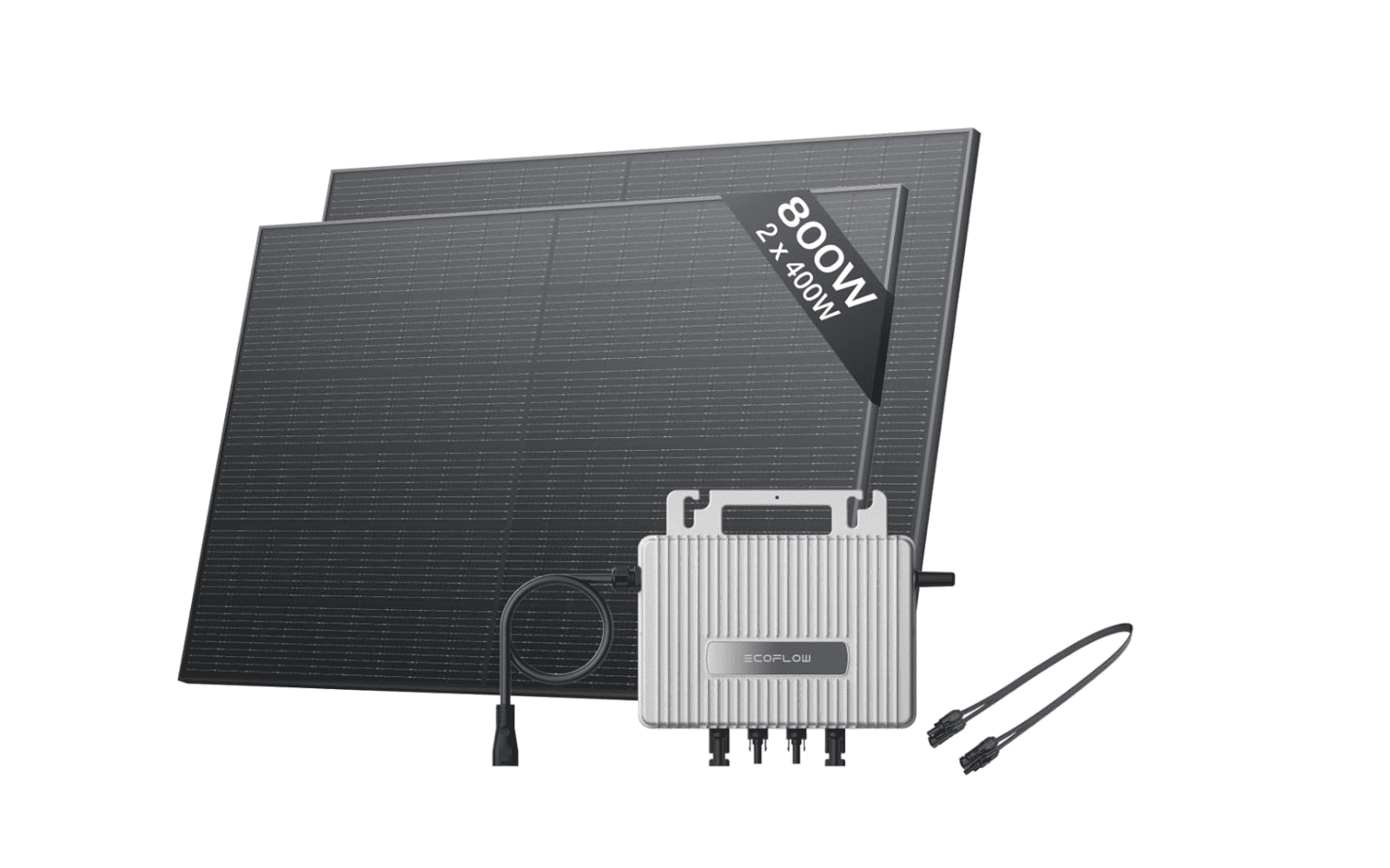
Coincidentally I watched a YT last night which showed the EcoFlow micro inverter plus 2 panels from city plumbing, total cost < £300 to give 800W max into a 13amp socket.
Was it via a plug (not legal in the UK as far as I'm aware) or did they get an electrician to connect it directly into the ring circuit?
 
Was it via a plug (not legal in the UK as far as I'm aware) or did they get an electrician to connect it directly into the ring circuit?
The illegal route, I think to show how easy it would be if allowed. He said the follow up video was to show a simple battery addition to smooth the output.
 
Last edited:
Was it via a plug (not legal in the UK as far as I'm aware) or did they get an electrician to connect it directly into the ring circuit?
As in my original post it is currently not legal but the government are looking into changing that.
You can plug them straight in and they work. The Ecoflow stream microinverter immediately cuts out if the grid supply fails.
General consensus is to buy panels elsewhere. For our house a steady 300 Watts would satisfy our needs other than boiling a kettle or cooking, which would be covered by the 1 or 2kWh battery.

Whole installation could be less than £800.

 
What do those on this board that know about these things think about it ?

It is more complicated for the UK because of our electrical systems and plugs but others will know more about the details.
(y)

Not legal in UK and IMHO, unlikely to be. This is because we typically have ring, rather than radial, finals in the UK and applying a secondary power source on the load side of the fuse is likely to end in tears.
 
(y)

Not legal in UK and IMHO, unlikely to be. This is because we typically have ring, rather than radial, finals in the UK and applying a secondary power source on the load side of the fuse is likely to end in tears.
Agreed it is not legal as as stated but many are now doing this with the Ecoflow systems. Here's an example

 
Is the problem that you could be drawing 32amps into the ring main from the grid then adding an additional 3 from the micro inverter which would then exceed the rating of the cable but the mob wouldn't detect it?
That is my main concern, but specifically compounded by the fact that a radial circuit only needs one loose connection at one of the sockets (and I've seen that on multiple occasions) to become two radial circuits, each carrying up to 40+ Amps before any solar production is added to that, all on a single 2.5mm2 T&E cable.

There are other concerns too, such as efficacy of older (e.g. type AC) non bi-directional RCD in the user's CU and its ability to not be blinded by DC current which is likely to be generated from a micro generation unit on its load side.

Then, there's the wider issue of whether all such "consumer installable" inverters will adhere to ENA G98 compliance in terms of disconnection times and quality of generated waveforms. I guess a lot will be cheap non-compliant Chinese rubbish - let's just hope they don't start selling ones with battery storage in them as well, or we'll be seeing a lot more fires - like with cheap e-scooter chargers, not to mention adherence to the 'currently-not-mandatory' BSI PAS 63100 guidelines :(

Edited to add: re the fire risk - IMHO it's even more risky that these things are aimed at people in high-rise blocks of flats.
 
Support us by becoming a Premium Member

Latest MG EVs video

MG4 EV Refresh + NEW MG4 EV Urban - UK arrival dates, prices, specs (2026)
Subscribe to our YouTube channel
Back
Top Bottom